IoNA data
Ichneumonids of North America had very humble origins. I originally created it as a simple taxon-specific informational site built simply on HTML, CSS, and very basic vanilla JavaScript. It was almost exclusively limited to Ichneumoninae, and the most useful parts of the site were the filterable gallery and genus pages. In this early stage, essentially all of the website was hardcoded in html pages except for the header, footer, and gallery functionality.
Over time I’ve expanded the site to cover all subfamilies worldwide and added many features that draw on a wide range of data sources. Most of this depends on automation: scripts now pull in data that I once typed into each page by hand. To help readers understand the site, I briefly describe each data source below, where it is used on the site, and what its limitations are.
Data sources:
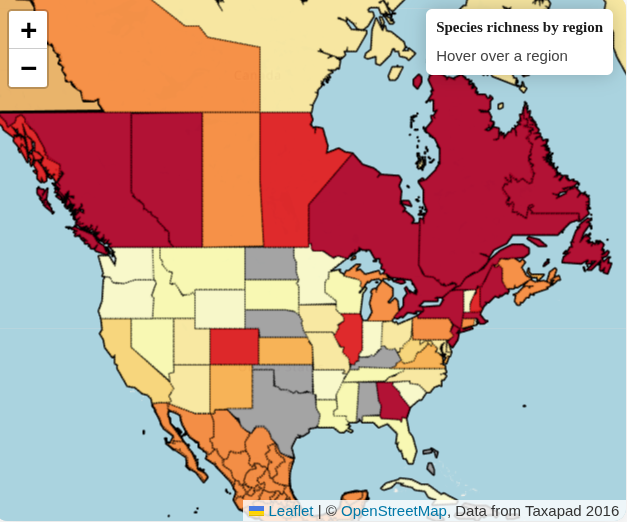
Taxapad is the primary source for distribution records, host records, nomenclature information, and the sources that back up these data. Taxapad is a desktop application created by Dicky Yu from the CNCI and is essentially the digital successor of Yu and Horstmann’s (1997) world catalogue. It is the single-most important resource for taxonomic information of ichneumonoids. Data from Taxapad powers the subfamily and genus choropleths, species lists (names, synonyms and original descriptions), lists of host records, the catalog, and the References tabs.
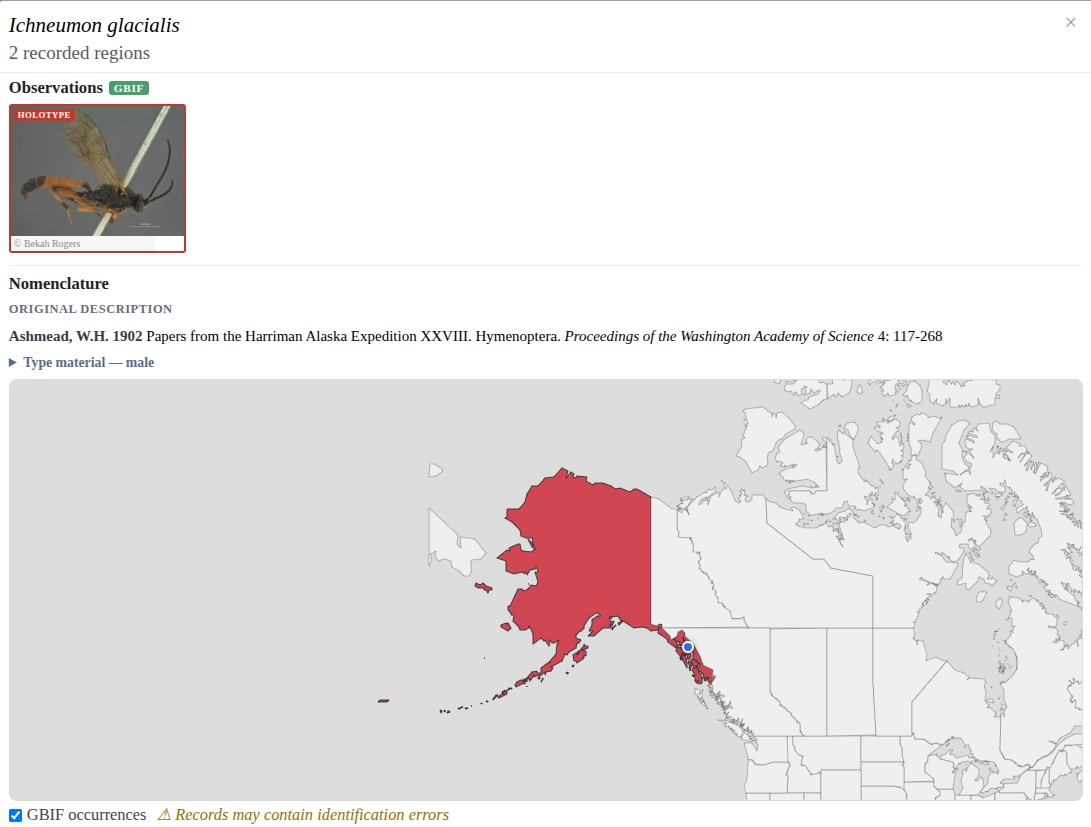
GBIF, the Global Biodiversity Information Facility, is the largest repository of specimen-level natural history data. The backbone of GBIF comprises data originating from collection databasing efforts around the world where museum curators, staff, and volunteers record label data from individual specimens. It also includes images and Research Grade observations from iNat. On IoNA, GBIF data are used in the species pop-up occurence maps and specimen images, and most importantly the holotype images. Trouble with GBIF is that the data are not perfect. The main problems are that specimens can be misidentified or there can be errors in data transcription.
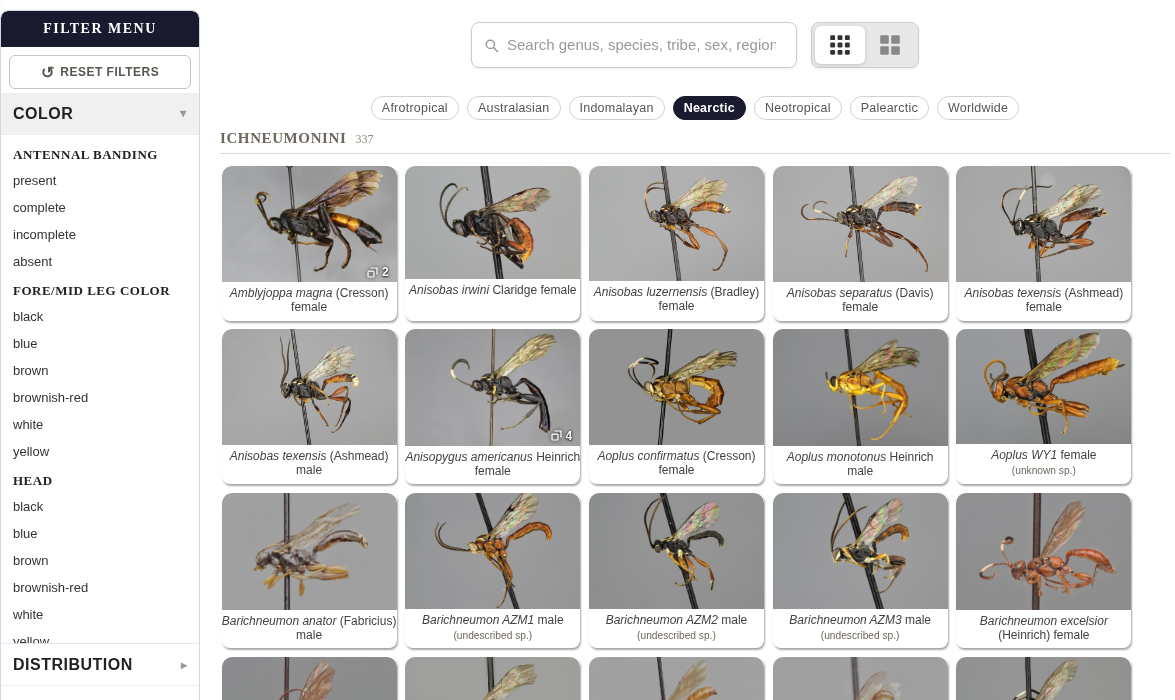
Hand-coded character matrices for images species in the gallery (really only ichneumoninae) - this is the hardest thing since the limiting factor is still myself. The actual file is simply a very large csv with the species and sex forming rows and characters the columns. With a few exceptions of the (mainly the distributions filters), the hard-coded subfamily csv’s power the filter galleries.
Plazi - Plazi extracts taxonomic treatments from published papers and shares them through GBIF. On IoNA they supply the type specimen data and treatment links in the species pop-ups. Coverage is uneven, since only papers Plazi has processed are included.
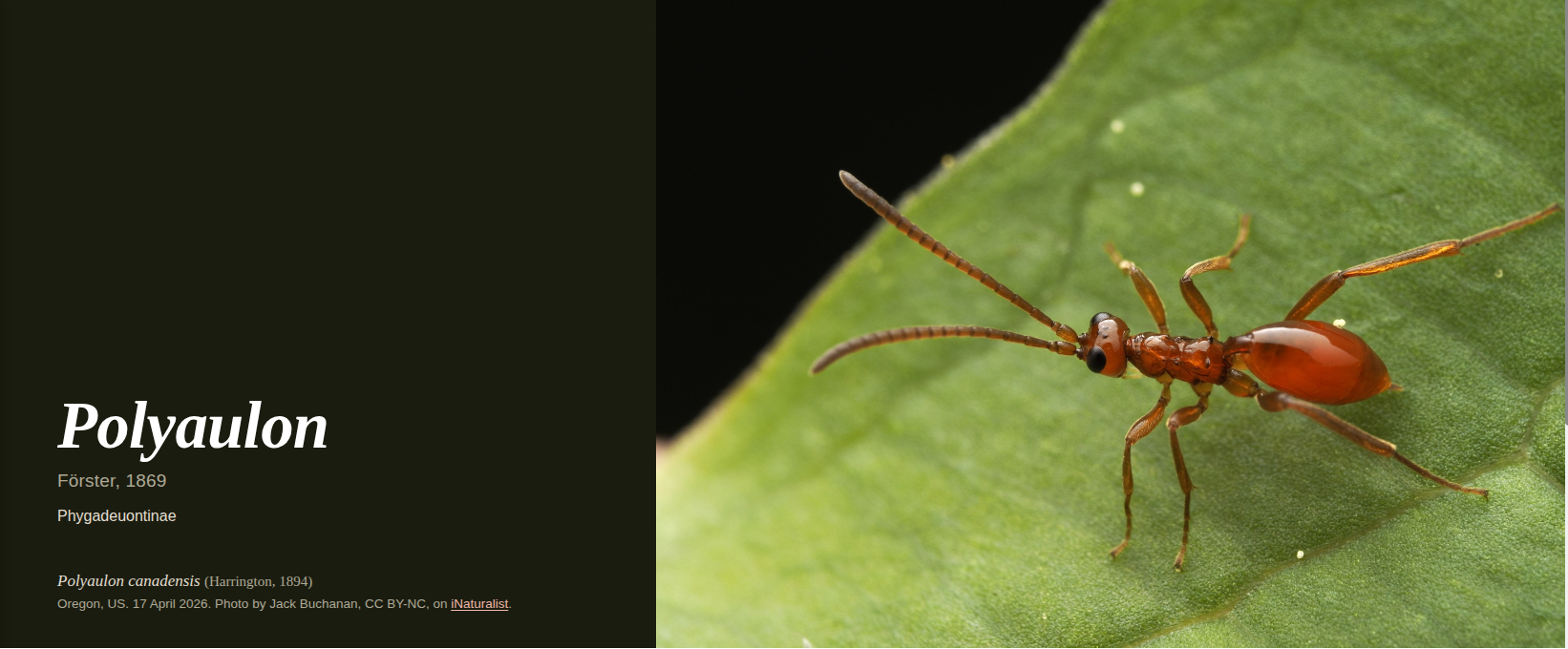
iNaturalist - INat information is ingested to IoNA in two ways. The first is from Research Grade observations that are ingested by GBIF and then to IoNA. Second, I have started to enhance the genus pages with banner images from iNat observations. There are automatically imported to a JSON file with some hand edits to make adjustments when needed (e.g., small changes to place names).
ZooBank - Species described after 2016, the last Taxapad release, are added to the species lists from ZooBank.
Machine-readable taxonomic publications from Pensoft journals such as ZooKeys and the Journal of Hymenoptera Research. Machine-readable essentially means that the publications aren’t only distributed as pdf’s, but also formatted as xmls or html’s such that different elements, such as keys, figures, taxonomic treatments, etc, can be programmatically extracted. These parts of the papers are then displayed on the appropriate pages, like species keys on genus pages complete with figures and taxonomic treatments on the right species popups. While extremely useful content for IoNA, the difficulty is that journal formatting has changed over time and contextual information is often needed to be added (for instance the names on keys in the pubs often only make sense within the paper, ie are too broad and only limited in scope. A key terminal printed as “M. atrata” can only be matched to a species once the paper’s treatments tell us which genus M. stands for).
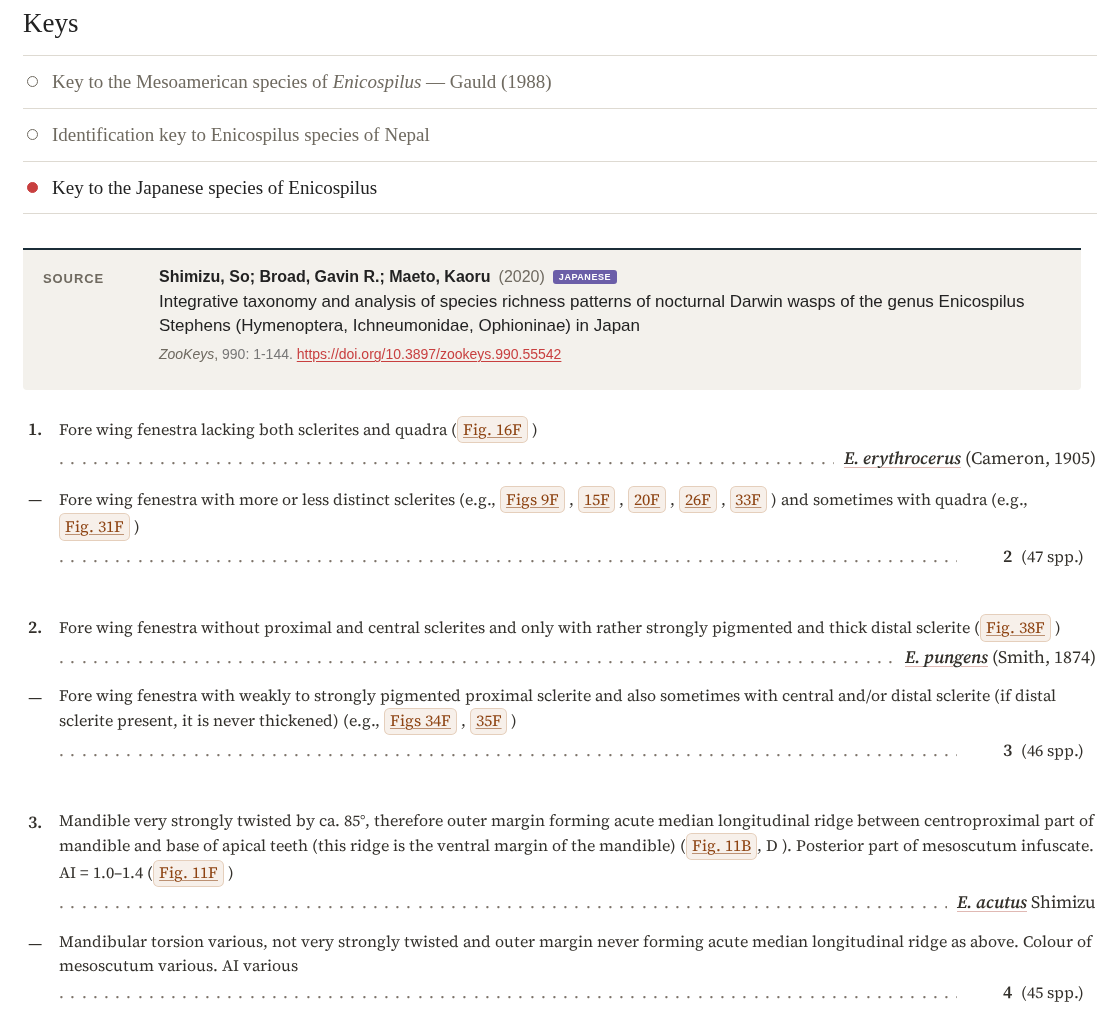
Open and non-copyrighted taxonomic publications. Taxonomy is a cumulative science, and keys and descriptions published decades ago are still the standard references for many groups. Luckily many of these works are out of copyright or openly licensed, so I have been working on extracting their keys, figures and descriptions and incorporating them into the genus pages and species popups. I rely most on the major revisions, such as Townes and Townes (1959 to 1962), Heinrich (1977) and Gauld (1976, 1988). Older works, like Cresson’s 19th-century papers, I use mostly for their original descriptions. They are brief and rarely illustrated, but for many species they are still the only published account.
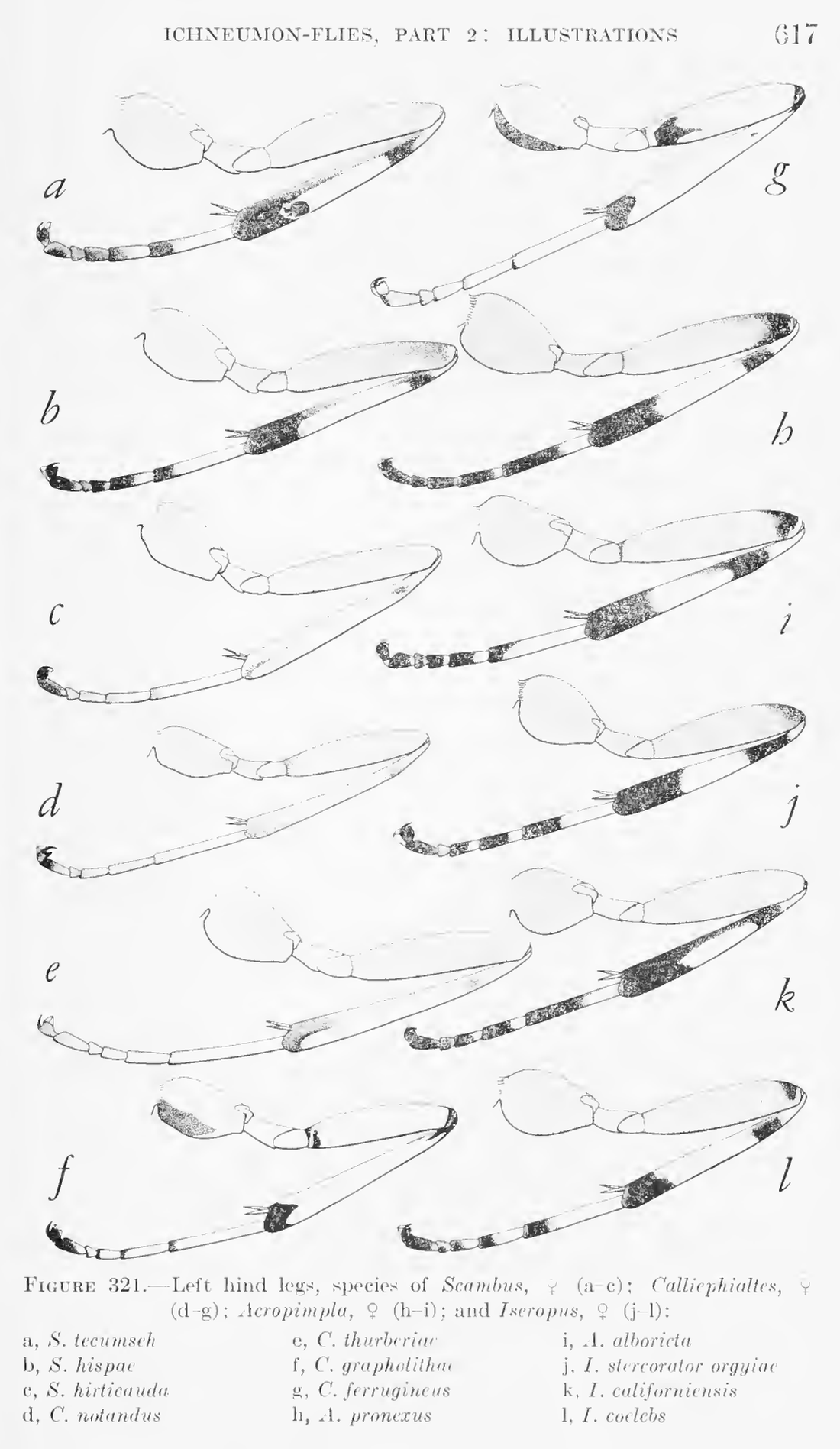
Modified keys from copyrighted works. Some keys come from works still under copyright, such as Heinrich’s (1960) synopsis of the Nearctic Ichneumoninae. These are not reproduced verbatim. I rework them for the site, updating names to current usage and normalizing the terminology, and cite the original on every key.
World Ichneumonidae Database (WID). IoNA users should also know about WID, a new online catalogue of Ichneumonidae started by Davide Dal Pos, curator of the Enns Entomology Museum at the University of Missouri. It is still growing and not yet as complete as Taxapad, but it should eventually replace it. Unlike Taxapad, it is continually updated and open to correction. WID is built on TaxonWorks and can be queried through an API. It’s the next big resource I plan to bring into IoNA, both to improve the catalog and to make adding newly described taxa much easier.